
Sofia Versus Racial Authority
The Color PurpleThis thread traces the escalation from Sofia's personal refusal to the racial violence of arrest, forced service, and incomplete freedom.
increasing Bearing strength in each event
 decreasing
Bearing strength in each eventdecreasingRefusing a Maid's Place

Refusing a Maid's Place
A Demand Disguised as Kindness
The mayor's wife praises Sofia's children and asks her to become a maid. The offer assumes that a Black woman's labor is available for white use.
Sofia refuses without softening her answer. She will not treat racial deference as a duty simply because the request is made politely.
Authority Responds
The mayor demands an explanation and slaps her when she repeats her refusal. The confrontation turns a personal boundary into a challenge to white authority.
The violence that follows shows the danger attached to a Black woman's unqualified no.
The Arresting Force

The Arresting Force
Unequal Violence
Police arrive armed and use force against Sofia and the children. Sofia fights back, but the officers have the numbers and institutional power to subdue her.
The state treats resistance as the offense while excusing the violence that prompted it. The conflict shifts from a street encounter to a long legal punishment.
A Family Divided
Sofia is jailed, leaving Harpo, the children, and her sisters to manage daily life without her. Her absence becomes a lasting wound in the family.
The arrest demonstrates how racial authority can separate a mother from her children while describing the separation as justice.
Prison Laundry

Prison Laundry
Punishment by Work
Sofia is assigned to wash prison clothes for long hours. She describes rotten food, vermin, and punishments for complaints.
The prison's routine disciplines her body and narrows her freedom. A sentence that began with one refusal becomes a prolonged attempt to force submission.
A Survival Mask
Sofia says she acts like Celie, jumping up to obey every order. The comparison is a survival strategy, but it frightens Celie because it shows how confinement can alter a person's behavior.
Sofia remains inwardly defiant even when outward compliance is necessary.
A Transfer, Not Freedom
A Transfer, Not Freedom
An Appeal Exploited
Mary Agnes visits the warden hoping to improve Sofia's situation. He assaults her, turning family advocacy into another exercise of male power.
The episode exposes the danger of a system in which a prisoner's safety depends on officials who are themselves unaccountable.
Domestic Confinement
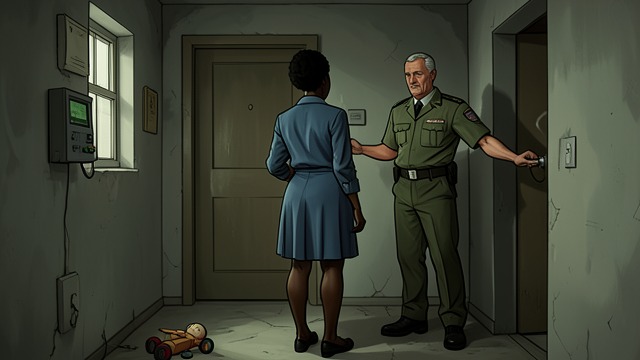
Sofia is eventually moved from prison to the mayor's household, where she works in a small room and remains separated from her children. The change is less brutal than prison, but it is still forced service.
Her punishment has changed location, not ended.
A Partial Release

A Partial Release
Conditional Return
Sofia receives time off for good behavior and returns to her family. The prison and household labor have altered her health and appearance, while the children have grown without her.
Release is a beginning, not restoration. She must rebuild relationships damaged by an unjust sentence.
Justice Still Missing
Sofia can work in Celie's store and make choices again, but the authorities never acknowledge the wrong done to her. Her survival does not repair the racial system that caused it.
The conflict ends with reclaimed agency, not with full restitution.
When the mayor's wife offers Sofia domestic work
Immediately after Sofia strikes the mayor
During Sofia's early years in prison
After Mary Agnes visits the warden
After almost twelve years away from her family
